vitalism
as herbalists, we are closely tied to the plants, and to the cycles of the year. it’s appropriate to take time to contemplate those cycles sometimes! herbalism is also an exercise in self-mastery: not the bludgeon of discipline (though discipline is often good), but the more compassionate acknowledgement of who we are as individuals, of…
Read More
For those of us who are actively experimenting and taking action to improve our health, who are carefully noticing that what we eat or how we sleep or how we live affects our well-being, who are researching and learning about ways to be healthier: Often there is an expectation, not always consciously, that if we…
Read More
Usually, when you hear the words “harm reduction”, you’re thinking about illegal drugs or perhaps alcohol abuse. Needle exchange is a good example: if someone is going to inject drugs, let’s at least be sure that they aren’t also injecting disease – less disease is less harm. But the truth is, we all self-harm. It’s…
Read MoreWhen someone starts to talk about detoxification or cleansing, I often find myself st[r]uck with a question: “What do you mean when you use that word, toxins?” (With echoes of that movie line – you know the one – in the back of my mind.)
Read More
Each year, our students do projects related to food, lifestyle, sleep, and more. All of our students do these projects, though they vary slightly from group to group. We do them each year too, different projects with different groups so that we can be in solidarity with each of them. When the Second Year students…
Read MoreOften, discussions of “women’s health” or “men’s health” are limited to the reproductive systems. When I teach about men’s reproductive health, I like to include an overview of common problems for men, because sexual function is dependent on the vitality of the rest of the body. But even before I get to that, I start…
Read More
I teach, a lot. Life as a teacher essentially means being on stage, most of the time. My students and my clients have images of me in their minds, and I’m quite certain that those images are better than what I really am, or that they are taking their image of my Best Self and…
Read MoreWe are a culture of More. We like words like SuperSize, Maximize, and Fullest Potential. We like, whether we admit it or not, concepts like Planned Obsolescence, because it allows for words like New, Shiny, Improved, and of course, Shopping. We believe things like “You can never be too rich, or too thin”. We, as…
Read MoreThis week, one of my pharmacy students stayed after class to ask for help. She wanted me to explain about the way insulin is supposed to cycle in the body again, because she has a friend who is a young doctor, and they had gotten into a disagreement. The young doctor friend claimed that a…
Read MoreWhen I was a kid, my mom sent us out to play. We went out for hours, and didn’t come back till someone was hungry. We played in the trees in the yard, or in the “trails” across the street – some wild undeveloped land along the banks of Bear Creek, that boys had ridden…
Read More
Katja’s recent article on the [mis]conception of “cure” in our culture reminded me of a related thought, one that comes to mind whenever I see another “Cancer Cure Found!?” headline. And since everything’s more concise in couplets: when fleshly red turns tumor-black, of this you may be sure: though whitecoat’s works may push it back,…
Read More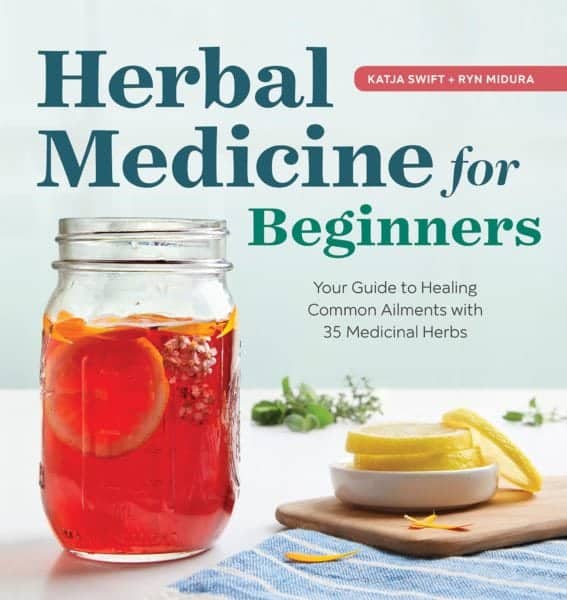
Our Book is Now Available on Amazon.com
Our first book is here!
This is the perfect introduction to a powerful yet manageable apothecary of 35 herbs and teach you how to apply them to common ailments.
We keep it simple and practical, and along the way teach you how to think effectively about herbs & herbalism, laying the foundations for deeper study.
The book is available through Amazon.com
Join our newsletter for more herby goodness!
Get our newsletter delivered right to your inbox. You'll be first to hear about free mini-courses, podcast episodes, and other goodies about holistic herbalism.